Expert SPML Rehabilitation
Specialized physical therapy before & after
Selective Percutaneous Myofascial Lengthening (SPML) surgery.
What is SPML?
MINIMALLY INVASIVE SURGICAL CARE
Selective Percutaneous Myofascial Lengthening (SPML) is a minimally invasive procedure that uses small, targeted releases to lengthen tight muscles and fascia, helping improve movement and mobility for children with conditions such as cerebral palsy.
Designed to Improve Function
By reducing muscle tightness and improving range of motion, SPML creates new opportunities for walking, balance, and everyday functional movement.
A TEAM-BASED APPROACH
Successful outcomes rely on more than surgery alone. Physical therapy before and after SPML helps children adapt to their new movement potential and maximize long-term results.
Why Rehabilitation Matters
PREPARING FOR SURGERY
Pre-operative therapy helps establish a baseline, improve strength and movement awareness, and prepare children and families for the rehabilitation process.
retraining movement
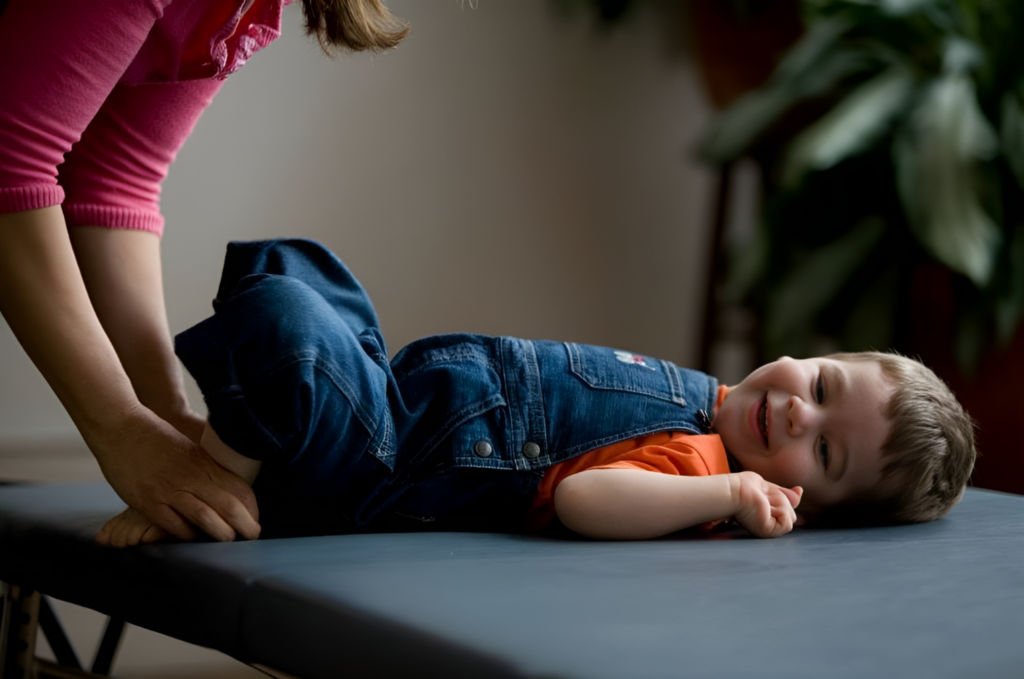
After surgery, children must learn new movement patterns. Therapy helps improve balance, coordination, strength, and functional mobility as the body adapts.
SUPPORTING LONG-TERM SUCCESS
Ongoing rehabilitation helps children build confidence, reinforce new motor skills, and translate surgical improvements into meaningful everyday activities.
Why Families Choose Nancy
UNPARALLELED CLINICAL EXPERIENCE
Nancy has spent more than 25 years specializing in SPML rehabilitation, helping children before and after surgery through individualized therapy designed to maximize long-term functional outcomes.
First Hand Surgical Insight
Unlike most pediatric physical therapists, Nancy trained directly with the inventor of SPML and observed procedures firsthand in the operating room, giving her a unique understanding of both the surgery and the rehabilitation process.
EDUCATING THE PROFESSION
For over 25 years, Nancy has introduced SPML rehabilitation concepts to the Feldenkrais® and Anat Baniel Method® communities through teaching, mentorship, and professional education.
Explore some of the frequently asked questions
about SPML, Recovery, & Nancy's expertise:
Nancy's Perspective
How did you first become involved with SPML?
I sent a boy with tightness in the right ankle as a result of brain damage. I could not change the length in the ankle. Dr. Jordan explained that no Ankle Foot Orthosis would help. The only change could come from SPML. I sent the child when he was 5. He walked with a severe limp. He now ice skates.
How has your background in the Anat Baniel Method® and Feldenkrais® influenced your rehabilitation approach?
My approach is radically differnet from any other P.T. modalities. It is working to meet the child exactly where they are, not imposing a specific outcome that we want. If they could walk, they would. They cannot. It is our job as skilled therapists to figure out what they need to move to the next step. We are more like psychotherapists in that we never force someone to do something that is too difficult. This isn’t a gym for world class athletes.
What inspired you to train directly with the inventor?
Seeing the brilliant results continuously from so many families.
Understanding SPML
Is my child a good candidate for SPML?
Any child with tightness in the legs as a result of Cerebral Palsy could be a potential candidate.
How is SPML different from traditional tendon-lengthening surgeries?
Unlike traditional tendon-lengthening procedures, SPML does not involve cutting the tendons. Instead, it uses small, targeted releases of the fascia to improve movement while minimizing tissue disruption.
Recovery & Rehabilitation
Why is post-operative therapy so important?
The child has to learn to walk with new flexibility. There are therefore new movement patterns that need to be learned neurologically.
What do families often misunderstand about recovery?
They think that the muscle relaxers used for post-op pain will damage their child. On the contrary, it helps prevent the pain so they are quicker to get up and move.
What makes successful rehabilitation different from simply "doing exercises"?
The surgery creates the opportunity for improved movement, but rehabilitation teaches children how to use it. Rather than simply stretching muscles, therapy helps the brain and body work together to develop new movement patterns that can be carried into everyday activities.
What improvements can families realistically expect?
Every child responds differently, but families often notice improvements such as walking with their heels on the ground instead of on their toes, straighter knees, less crossing of the legs while walking, and smoother, more functional movement.